Words with Wildcats!

This week’s inquiry: “Do you have any goals or resolutions for the spring semester?”


Frank Rebelo, Senior, Environmental Science: Atmospheric Science

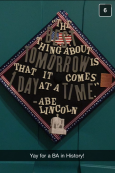
“I’m going to try to manage 22 units well enough to not miss any assignments or due dates. I’m also aiming for straight A’s this semester.”


McKenna Collins, Freshman, Business

“My goal is to spend more time studying and concentrating on school work than I did last semester.”


Aaron Draper, Super Senior, English Literature

“I’m hoping to be able to finish my last semester with straight A’s. I’m also going to challenge myself to find free parking every day this semester. Wish me luck!”


Amanda Blake, BA Art Education 2011, Teaching Credential Program

“I want to make more art and strive to be both healthy and happy.”


Cody Sevedge, Senior, Applied Computer Graphics

“My resolution is to stop worrying about the small things and to start shaping a more positive outlook on life.”


Leah Jacobs, Senior, Biology

“My goal for this semester is to find as many internship and volunteer opportunities as I possibly can.”

Leave a Comment

Filed under Activities, Student

Writing with Light

Santy Gray, Senior, Anthropology

Anthropology, the study of people and their impact on earth, is by nature a fascinating subject. Every human being is connected by the simple fact that we are human. To understand the ways that we are all connected is to tell a story. The experiences we have and our reactions to those experiences are what ultimately shape who we are and our perspective. To tell an adequate story about our place, habits, outlook, and experiences in the world we need the tools to do so.

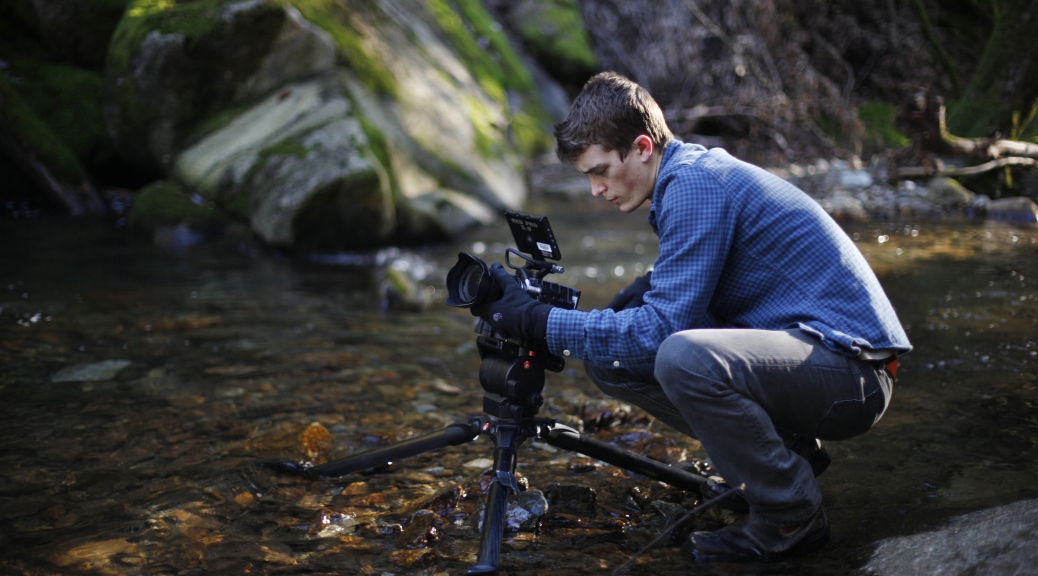
The Visual Anthropology Lab offers students the opportunity to record the human experience. The topics are endless and the results vary. The story has to unfold on its own and then be pieced together so that it can be understood. There is this control that must cease when the camera is rolling; it really is a beautiful thing.

For a class assignment I worked on a film titled For the Love of Dance: Anthropological Implications of Dance in Chico. What this film explored was the dedication of time, energy, and practice that goes into being a dancer. In this film the dancer is defined as three different people who practice classical dance, ballet, and hip hop dance.

While capturing the moment is top priority there is another aspect to working with the camera. It is a technical device, and the goal is to make it produce images the same way we see them, if not better. One of the major elements is light. Photography can be described as the art of writing with light. It is often referred to as the essence of using film. This was and still is one of the hardest techniques for me to become an expert at.

There is a certain artistic eye that has to be developed. This eye works in conjunction with the tools available, in this case the camera. It is my job to make sure the camera is translating the story correctly. We can return to lighting. When filming people, the videographer must make them look warm and alive. Natural sunlight can do this. However, there are those times that people must be interviewed in a building, classroom, or office. In cases like this the lights (tungsten) can make people look cold (blue) and washed out. It all depends on the conditions of light.

Lighting, the way the subject is positioned, and the background all have to tell a story. The camera, unlike the eye, has a small frame that it can see. The picture produced has some very clear borders. This means that every element in the shot has to matter, has to be taken into account.

The amount of time that goes into producing a film is best described in terms of a ratio. For every hour of film shot you may use 2-3 minutes of it. It is quite a reality check when you realize how much time it takes to edit and produce a final film.

2 Comments

Filed under Activities, Student

Why Our Ag Majors Are Growing

By Jennifer Ryder Fox, dean of the College of Agriculture

After reading the January 19, 2012 Yahoo Education article “College Majors That Are Useless,” one might be led to believe that the author, Terence Loose, has something against eating, wearing clothes, enjoying a natural landscape, or smelling a bouquet of roses. What other reason could he have for singling out Agriculture, Animal Science, and Horticulture as three of the five most useless degrees? Mr. Loose’s rationale and indeed the original ranking mentioned in the article are certainly not based on fact.

In contrast to the Yahoo article, a Purdue University study funded by the USDA projected an estimated 54,400 annual openings for college graduates in food, renewable energy, and the environment between 2010 and 2015. The study projected only 53,500 qualified graduates will be available each year and stated that employers have expressed a preference for graduates from colleges of agriculture and life sciences that tend to have more relevant work experience and greater affinity for those careers.

Further demonstrating the need for educated agriculturalists, the November 2009 Monthly Labor Review projected particularly strong (double-digit) growth in certain agricultural careers such as agricultural inspectors, animal scientists, food scientists and technologists, natural sciences managers, pest control workers, soil and plant scientists, and veterinarians. A mere two weeks ago, the Washington Post printed the results of a Georgetown University study showing that recent college graduates with degrees in agriculture and natural resources were among those with the lowest unemployment rates in the nation at 7 percent, surpassed only by graduates with degrees in health (5.4 percent) and education (5.4 percent).

Across the country state support of public universities is dwindling, and the consequence of budgetary decreases is seen with some universities making choices about programs to reduce or eliminate. In a few states, agricultural programs have been targeted for reduction or even elimination. State supported universities in California have also been affected by reduced state budgets, but there’s no talk of eliminating any of the universities’ agricultural programs, as agriculture is the top economic driver in California and generates over $33 billion in revenue for the state while producing over 350 products. Rather, the effect of reduced state support has been to tighten our belts and look to external grants and contracts and other funding sources so that we can serve our increasing number of students.

The California Community College Centers for Excellence recently completed an environmental scan of the agriculture value chain in California and found that there are currently 2.5 million individuals employed in more than 800 job titles within the agriculture value chain in the state. The average annual salary for agricultural value chain workers is $50,000. While the number of production jobs is expected to decrease in the next five years, a net increase of 181,000 jobs is expected throughout the entire agricultural value chain, which includes support, research, technology, production, processing/packaging, marketing, and sales and distribution. No one disputes that with advanced technology and mechanization, skilled production jobs in agriculture (or any field for that matter) have decreased and will most likely continue to give way to mechanization.

Here at CSU, Chico, the optimism for agricultural careers can be seen in the 50 percent enrollment growth in programs offered through the College of Agriculture during the past five years. And across the country, agriculture programs are seeing a surge in student interest. Clearly, our students and those in other ag programs are seeing the tremendous career opportunities available in agriculture and are jumping at the opportunity to pursue them, Mr. Loose’s puzzling attack on their choice of major notwithstanding.

1 Comment

Filed under Activities, Food, Programs, Staff, Sustainability

Steady Pace Towards Olympic Dreams

Scott Bauhs, BA Social Science, 2008

Scott Bauhs was a standout distance runner at Chico State from 2004 to 2008. He is now working out at a USOC Olympic Training Center in Chula Vista, Calif., where we caught up with him. He spends time both at the sea-level training center in Chula Vista and in Mammoth Lakes, Calif., where his team, Mammoth Track Club, is based. Bauhs took time out of his busy training schedule to answer a few questions.

Q: How long have you been preparing for the qualifiers (Olympics)?

A: I have been running for around 15 years, which certainly helps as I prepare for the Olympic Trials. I began truly seeing my potential in my later years at Chico, and I have been running full time since 2009.

Q: What is your training routine? Is there anything special you do to prepare for a race?

A: At Mammoth Track Club we do the bulk of our running in the morning, which usually ranges from 8 to 12 miles followed by a 4- to 6-mile evening run for most days of the week. On Wednesday we typically run a medium-long run of 13-16 miles, and on Sunday we run 18-22 miles. We also do supplementary exercises like plyometrics [a type of exercise in which the muscles are repeatedly stretched and suddenly contracted] and weight lifting every day but Sunday.

Q: Congratulations on setting a new personal record in Houston! What was the experience like? How did you feel about the race?

A: Thank you. A lot of work went into running my race in Houston, and it was great to see it pan out the way it did. I’ve learned that you can never take the good races for granted, and I am very happy with my weekend. As with any race, there are things I could have done differently, like starting a bit quicker or keeping the pace a bit more; even that might improve my result next time, so we’ll see.

Q: What was the toughest moment during racing in general?

A: In distance racing there is always a point where you start to really feel the fatigue, but the finish isn’t quite in sight yet. In bad races, this point usually comes pretty early, and in good races it doesn’t seem to be as strong, but pushing through that is essential to being a good runner.

Q: What sparked your interest in pursuing

2010 Zappos Rock 'n' Roll Marathon in Las Vegas

Olympic-level racing?

A: Well, I think just about any competitive runner out there has an interest in Olympic-level running. I first started noticing that it might be possible for me while I was improving each year at Chico.

Q: What’s your most memorable moment running for Chico State?

A: Winning the 2007 10,000m title, followed by finishing 1-2 with Charlie Serrano in the 5000m at the NCAA National Championships.

Q: Any advice for aspiring runners?

A: Always focus on getting a little bit better, and eventually you will be great. Communicate with your coach your ideas for training and racing but always listen to your coach’s advice in the end.

Q: What’s next on your journey to the Olympics (and in your life)?

A: I will do a few races between now and the Olympic Trials, and I will be training as well as I can.

Leave a Comment

Filed under Activities, Recreation, Student

Man vs. Wild, Huber Style!
Scott Huber leading a family bird-watching trip.

Scott Huber, Education and Research Coordinator, Ecological Reserves

I have the world’s best job. As the education and research coordinator for CSU, Chico’s Ecological Reserves I get to do both of the things that I love most: sharing my love of nature with others and getting my hands dirty as I help protect the reserve’s natural resources.

Dr. Paul Maslin pointing out the effects of fire on native trees.

On Tuesdays and Saturdays I work with the field manager, Paul Maslin (professor emeritus, biological sciences). First thing in the morning we load up an ATV with tools and head out – sometimes all the way across the creek to isolated Musty Buck Ridge. Typical tasks include creating fire breaks, removing invasive plants, and maintaining trails.

Northern saw-whet owl, the subject of two research projects at CSU, Chico Ecological Reserves.

On other days I join biologists as they work on their projects. I sometimes assist owl researchers: During the day we track radio-collared northern saw-whet owls with telemetry, scrambling up steep, brushy slopes to record the exact location of the owl; at night we use a recording to lure owls into a mist net, then we weigh, measure, and band them to aid in understanding their migration.

Other recent projects I’ve assisted with were helping a grad student determine what areas of the reserve would be best for studying foothill yellow-legged frogs and helping a Department of Fish and Game biologist choose a spot to capture and study band-tailed pigeons.

An educational session at the Big Chico Creek Ecological Reserve.

In the spring and fall I have the privilege of sharing my enthusiasm for wildlife with school children as I visit classrooms and host class field-trips on the reserves. Our excellent staff teaches the kids about birds, turtles, geology, and Native American history, attempting to instill in them an outdoor ethic and appreciation for their natural surroundings.

I have the world’s best job.

You can keep up with Scott’s adventures on the BCCER’s Facebook page.

The Big Chico Creek Ecological Reserve contains 3,950 acres of diverse canyon and ridge habitats, including 4.5 miles of Big Chico Creek, and is home to many species of plants and animals. Our mission is to work together with the CSU Research Foundation’s Ecological Reserve System to preserve critical habitat and to provide a natural area for environmental research and education. BCCER contributes to the understanding and wise management of the Earth and its natural systems by preserving critical habitat, and providing a natural area for environmental research and education. You can learn more about the reserve at their website.

Leave a Comment

Filed under Activities, Profile, Recreation, Staff

Hidden Gems: Creekside Educational Garden

The Creekside Educational Garden is quite the hidden gem due to its location behind Colusa Hall. Directly south of Big Chico Creek sits an 8,000-square-foot section of land that has been set aside for this special project.

The project began in the spring of 2011 as the third part to the larger Creekside Plaza Landscape Project. Numerous faculty and department members, as well as the Mechoopda Indian tribe, worked together to create a garden using plant species that are historically found adjacent to riparian areas for this geographical zone. Such species include the California Poppy, the Valley Oak, and the Western Redbud.

Located throughout the garden are small informational markers, which give specific information for each plant, including the common name, the scientific proper name, and other interesting facts. There are also a few larger signs that map out the multitude of plants scattered throughout the garden.

The walkway, winding along with the garden, was inspired by Big Chico Creek, which sits only a few feet away. The overall aesthetic of this section of campus is soothing and reaffirms our strong connection with nature in Chico.

Recently, artists have applied to create a beautiful piece of public art for the garden. Three of the qualified artists have been chosen and are now working to develop project proposals, from which one will be selected. The installation of the selected piece will begin in the spring of 2012 and is scheduled to be finished by May.

If you have a spare moment or want to take a different route to class, meander over to the Creekside Educational Garden to soak in the calm environment and possibly learn a thing or two about plant species that are native to Chico.

This post is part of a recurring theme, Hidden Gems of Chico State.

The piece is also featured in the latest issue of Inside Chico State.

Leave a Comment

Filed under Activities, Sustainability, Uncategorized

Delta Xi Phi Days

by Michaela Boggan, Senior, Journalism

Being a member of Delta Xi Phi Multicultural Sorority Inc. has challenged my beliefs, priorities, and goals. When I decided to pledge a sorority at Chico State, I was forced to think about what I stood for, who I was, and who I wanted to be.

DXP volunteering for Habitat for Humanity, October 2011

My decision became obvious when I encountered Delta Xi Phi, because I felt that I encompassed and strived to display the five pillars the sorority stands for: advocating the advancement of women through higher education, increasing multicultural awareness, participating in community service, establishing friendship, and enjoying the bonds of sisterhood.

As a member of this sorority, I’ve been able to define who I am. I truly believe I have become a better person because I have had numerous opportunities to develop my skills as a communicator, leader, and critical thinker. I decided to take on the challenge and became president of the sorority with hopes of attaining skills that will help me in future endeavors.

Delta Xi Phi girls during the International Fair in April 2011

Apart from growing as an individual, I have met so many inspiring individuals within the Greek student population who strive to make a difference in the community. I am confident that the friendships and strong bonds I’ve made with all of my sisters will last a lifetime, and I feel honored to be part of an organization that is recognized across the nation.

3 Comments

Filed under Activities, Student

Vegan Treats: Easy as Pie!

By Jessica Post, Faculty Affairs Coordinator and alumna (BS 2006, MBA 2008)

After 10 years being a vegetarian I decided to make the switch to a completely vegan diet. This change was surprisingly easy for me, and I have been enjoying the challenge of finding new ways to cook and bake. While I had an easy transition, I knew my switch would be hard on my mother—not because she is some crazy meat eater, but because she’s such a foodie and an amazing cook!

So, it came as no surprise to me that a couple weeks before Thanksgiving, I got a call from my mom, worried that I wouldn’t be able to eat her pumpkin pie. We have already adapted the rest of the meal for vegetarians (her Tofurky is amazing), but the no eggs restriction was making dessert really difficult.

Using my new-found skills at finding vegan recipes, I tracked down a delicious vegan pumpkin pie recipe.  Best part is this recipe makes two pies, so take one to your family dinner and enjoy the other on Friday. This can be made using real pumpkins, but if you’re into quick and easy like me, you can just buy a 15- or 16-ounce can of pumpkin (the organic kind is definitely the best). So here we go:

Vegan Pumpkin Pie
(Recipe adapted from Epicurious.com)

  • 2 15-16oz cans of pumpkin (organic pumpkin available at Trader Joe’s)
  • 1 1/2 tsp cinnamon
  • 1 tsp ground cloves
  • 1 tsp ground allspice
  • 1/2 tsp ground ginger
  • 1 12.3-ounce package firm silken tofu
  • 1 1/3 cups natural granulated sugar
  • 2 9-inch natural pie crusts (if you buy pre-made crusts make sure they are vegan – try Marie Callendar’s or Wholly Wholesome brands)


1. Preheat the oven to 350° F.

2. Combine pumpkin, spices, tofu, and sugar in a large food processor. Blend until smooth. (You can do this with half the ingredients at a time if you have a small or medium size processor.)

3. Pour the filling into both crusts. Bake together for 40 to 45 minutes, or until the crusts are golden and the filling is firm. Remove from the oven and let the pies cool to room temperature. Cut into 6 or 8 slices to serve.

Enjoy your pie with friends and family!

2 Comments

Filed under Food, Staff, Uncategorized

Big Bass, Big Money

By Bryce Hayes, CSU, Chico Alumnus, Construction Management 2011

Nicholas Carrico and Matt Wetmore show off their catch at this year's National Guard FLW College Fishing event at Clear Lake. (Photo by David A. Brown)

When a good friend of mine mentioned he was starting up a fishing club on campus in 2009, initially I didn’t think much of it. I have always had a passion for fishing and the outdoors, but never considered joining a club that offered this type of an opportunity. Little did I know that joining this club would be one of the best decisions I made while attending Chico State.

The third year of the club I succeeded Parker Moran, the club president and founder. Fulfilling the role of president helped me to grow as a person and as a leader in all aspects of life. On a weekly basis I was dealing with issues ranging from controversial club finance matters to our public relationships with the school and sponsors. I had never realized what a lucrative sport competitive bass fishing is. This may be a bold statement, but I would be willing to bet that the Chico State Bass Team is the most profitable and successful club sport that the University has ever seen. We have several tournaments a year that pay $10,000 for a first place finish—and, yes, we have won our share of those!

Nicholas Carrico and Matt Wetmore hold up their first place winnings! (Photo by David A. Brown)

In 2011 alone, we placed 4 teams in the top 5 throughout our regular season qualifying events.  All four of those teams move on to the western regionals and have a shot at winning a ranger bass boat wrapped in school colors (Feel free to look at www.collegefishing.com to see our winning amounts and details).

Most of us grow up playing competitive sports in grade school and some continue to do so through high school. Very few of us have the opportunity to continue these sports at a collegiate level. With Chico State not having a football team or much student camaraderie, the Bass Team helped fill the gap for me and shaped my Chico Experience. Becoming a part of the Chico State Bass Team proved to be something I will never regret. I met a lot of quality people, made some good memories, and picked up a hobby that I will be able to enjoy for a lifetime.

If you’d like to see more of the Bass Club, you can check out this video courtesy of The Orion, 2010.

Leave a Comment

Filed under Activities, Programs, Recreation, Student

Hidden Gems: Chico State Rope Course

By Lee Shawver, Challenge Course Director

Nestled in the southwest corner of our campus is an area consisting of telephone poles connected by steel cables and other peculiar contraptions. This is Chico State’s ropes course—clearly a hidden gem.  Here, groups climb, jump, swing, fly, laugh, cry, and ponder—all in an effort to get a better understanding of themselves and others, work as a team, learn to lead, and maybe even discover a sense of community in the process.

I find it a shame that this course is relatively unknown in the Chico community. I am the director of the course, and it’s my job to guide people through the process. I have witnessed the transformational power of a ropes course experience and believe that everyone should experience the power that lies in engaging in managed risk. I regularly facilitate groups on the course, and I see them work to succeed in overcoming challenges that have real-life applications. The course is not just for Outdoor Education students—and it’s not just for Chico State students. It exists to provide our community with creative and engaging opportunities for growth and discovery.

Our program is designed to break down barriers, to challenge comfort levels, to realize the power of vulnerability and social exchange, and to help create a sense of belonging. A ropes course experience demonstrates metaphorically the challenges we all face and how to develop tools to navigate those challenges. I want everyone to experience this exhilarating ride.

If you are interested in or have any questions regarding the course, you can contact Lee at lshawver@mail.csuchico.edu or visit the ropes course on the Web.

2 Comments

Filed under Activities, Recreation